


Myopia Management
What is myopia?
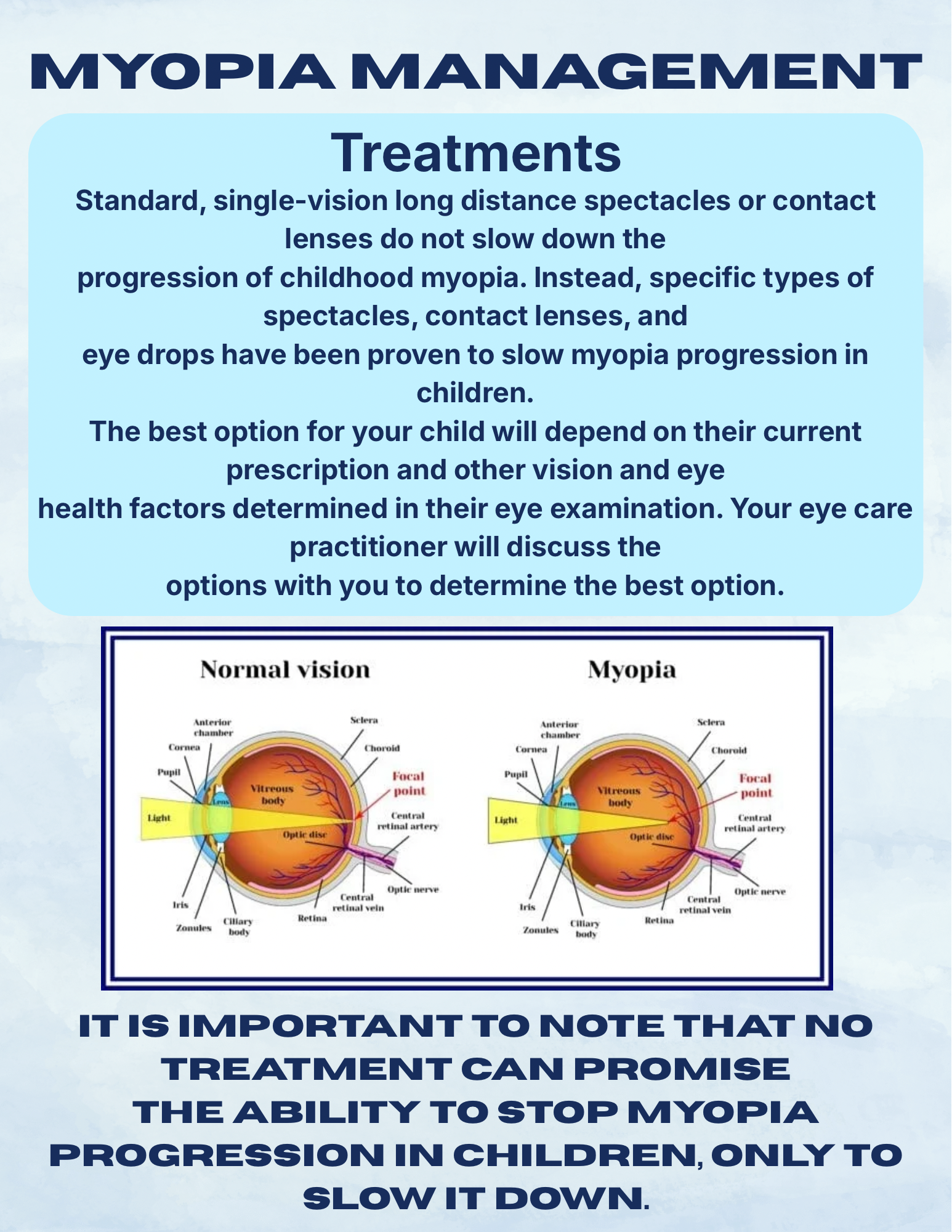
Myopia is a blurry long-distance vision, often called ‘short-sightedness’ or ‘near-sightedness’. A person with myopia can typically see clearly up close - when reading a book or looking at a laptop screen - but words and objects look fuzzy on a whiteboard, on television, across the room, when looking outdoors, or when driving.
When is myopia a concern?
The eyes are meant to grow from birth until the early teens and then cease, but in myopia the eyes grow too much and/or continue growing into the teenage years. Once a child becomes myopic, their vision typically deteriorates every 6-12 months, requiring a stronger and stronger prescription. Most myopic children tend to stabilize by the late teens and early 20’s. Excessive eye growth raises concern because even small amounts of stretching can lead to the increased likelihood of vision threatening eye diseases in later life, such as myopic macular degeneration, retinal detachment, and cataract.
Treatments
Standard, single-vision long distance spectacles or contact lenses do not slow down the progression of childhood myopia. Instead, specific types of spectacles, contact lenses, and eye drops have been proven to slow myopia progression in children. The best option for your child will depend on their current prescription and other vision and eye health factors determined in their eye examination. Your eye care practitioner will discuss the options with you to determine the best option.
IT IS IMPORTANT TO NOTE THAT NO TREATMENT CAN PROMISE THE ABILITY TO STOP MYOPIA PROGRESSION IN CHILDREN,ONLY SLOW IT DOWN.


CONTACT INFORMATION
Call Us:
(256) 739-4000OFFICE HOURS
- Monday 8:00 AM - 5:00 PM
- Tuesday 8:30 AM - 5:00 PM
- Wednesday 8:00 AM - 5:00 PM
- Thursday 8:00 AM - 5:00 PM
- Friday 8:00 AM - 4:00 PM
- Saturday Closed
- Sunday Closed
© 2026 Boozer Eyecare All rights Reserved - Accessibility Statement - Privacy Policy - Sitemap
Page Break
Powered by:
